Learning Objective: Engage with theories and practices related to Literacy for Everyone and AAC technology to promote literacy skills and self-expression in person and through digital mediums.
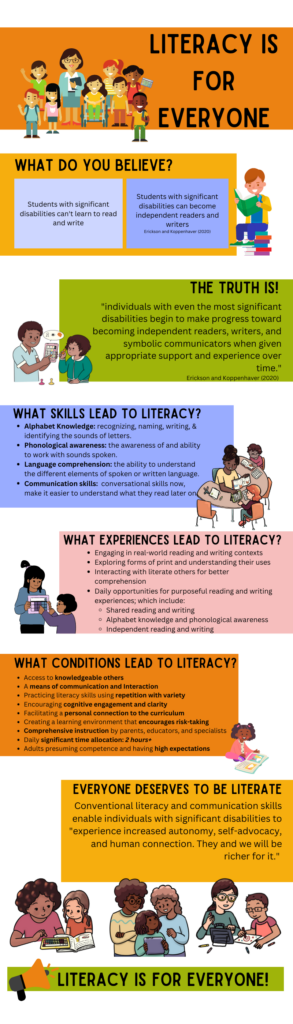
As educators, we must ensure that all students, regardless of their abilities, receive the support they need to succeed, including comprehensive literacy instruction. We must proactively support students with significant disabilities by implementing effective strategies, utilizing assistive technology, shared and independent reading and writing skills to support emergent literacy in students with significant disabilities. By working to implement these best practices, we can empower children with complex communication needs to reach their full potential and achieve their dreams.
Reflecting on Literacy for Everyone & Designing Literacy Supports for icreate sessions at the PANDA AAC Camp.
As I consider my approach to promoting literacy skills and self-expression, I am confident in the influence that Literacy for Everyone, a website created by the cofounders of BCAAC and derived from the work of Karen Erickson and David Koppenhaver’s book Comprehensive Literacy for All: Teaching Students with Significant Disabilities to Read and Write, from the cofounders personal experiences as special needs parents, and from other authors and educators they have had the privilege to come across on their journey, has had on my planning choices. The theories and practices outlined on the Literacy for Everyone website have aided me in creating a supportive learning environment for the icreate sessions of the PANDA AAC Camp that inspires learners to express themselves through reading, writing, and communication.
To implement these theories and practices, I have made a deliberate effort to provide learners with various reading materials that cater to their interests and preferences. Additionally, I have encouraged the campers to develop their writing skills by offering writing prompts paired with maker challenges using AAC symbols and focusing on low-floor, high-ceiling experiences, such as writing books through stickers on pages that mimic the day’s book.
Furthermore, I have integrated interactive activities such as maker challenges using AAC symbols and focusing on low floor high ceilings experiences; those that all students can access but that can be extended to high levels. Such as art challenges, robotics, and dramatic play, to promote literacy skills. These activities improve learners’ reading and writing abilities and enhance critical thinking and communication skills.
Overall, I am grateful to Literacy for Everyone for equipping me with the knowledge and skills necessary to promote literacy skills and self-expression. Their support has allowed me to create an inclusive and supportive learning environment in the icreate sessions that have the potential to increase learners’ confidence and passion for reading and writing.